
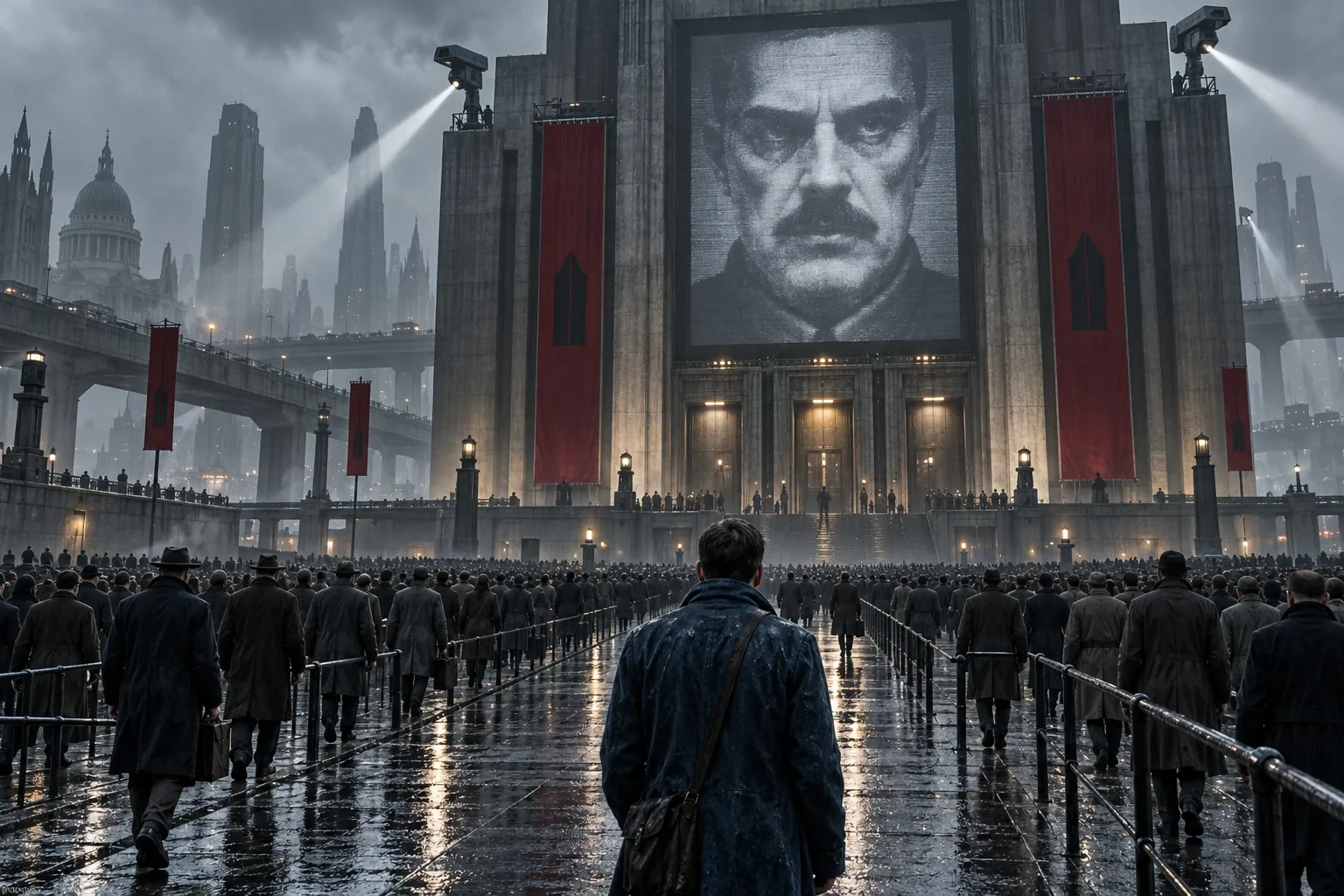
George Orwell has become the patron saint of arguments he isn’t around to correct. Someone installs a camera: 1984. Someone removes a social media post: 1984. Someone asks for evidence supporting a claim: apparently, also 1984. Big Brother has a remarkably busy schedule for a fictional dictator.
There are excellent reasons to read Orwell when thinking about surveillance, propaganda, censorship, and political obedience. There are considerably weaker reasons to wave him around whenever somebody challenges your opinion.
Understanding the difference means reading beyond the famous slogans. It also means accepting something deeply inconvenient: a warning about intellectual dishonesty applies to your side as well.
Spoilers follow. The book was published in 1949. You’ve had a reasonable opportunity to read it.
A Nightmare Written From Experience
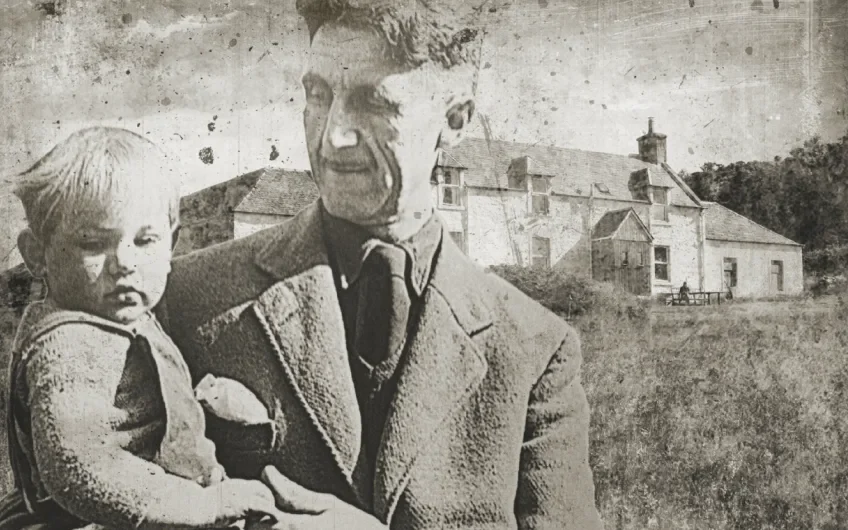
Nineteen Eighty-Four appeared in Britain on 8 June 1949. Orwell worked on it at Barnhill, on the Scottish island of Jura, completing the manuscript in 1948 while seriously ill with tuberculosis. His health deteriorated, and he died on 21 January 1950, aged forty-six. The novel was his last. The Orwell Foundation’s biography records those final years.
The isolated farmhouse makes an appealing literary image: a sick writer confronting the future while the weather does something aggressively Scottish.
But the book grew from experiences accumulated long before Jura. Orwell had served in the imperial police in Burma, investigated poverty, fought against Franco in Spain, and worked at the BBC during the Second World War. His distrust of authority came with practical experience of the machinery. This wasn’t someone inventing oppression because sinister uniforms made an attractive aesthetic.
The timing also matters. He was writing after a world war, with fascist violence and Stalinist repression already part of the political landscape. The machinery of the nightmare drew on things people had done, rather than inventions waiting patiently for the twenty-first century.
Nor was he predicting a specific calendar year with supernatural precision. Editor Peter Davison records that the manuscript’s setting shifted from 1980 to 1982 and finally 1984. The familiar explanation that Orwell simply reversed 1948 shouldn’t replace that more complicated history. Davison’s textual note traces the changes.
Treating the novel as a failed appointment with the future misses its purpose. Political warnings don’t expire because the diary page turns.
Orwell Was a Socialist. Deal With It

Here’s where some enthusiastic Orwell fans develop an urgent appointment elsewhere. He was a democratic socialist.
In his 1946 essay “Why I Write”, Orwell described his serious writing since 1936 as opposing totalitarianism and supporting democratic socialism. Those commitments belonged together. His hostility to Stalinism didn’t mean he had secretly become a cheerleader for every opposing ideology.
The distinction matters because the ruling Party in 1984 calls its doctrine Ingsoc, short for English Socialism. Readers sometimes treat the name as the entire argument. Apparently, political organisations are always exactly what their branding promises. A touching faith in the marketing department.
Orwell explicitly resisted that interpretation. In a June 1949 letter to Francis A. Henson, he explained that the novel wasn’t intended as an attack on socialism or the British Labour Party. He was exposing dangers of concentrated power already partly realised under communism and fascism. The surviving letter excerpt is quite unambiguous.
This doesn’t make Orwell’s politics compulsory for readers. You can disagree with him. It does make it dishonest to remove his politics, polish the empty space, and announce that he agreed with yours all along.
Spain Taught Him What Happens to Facts
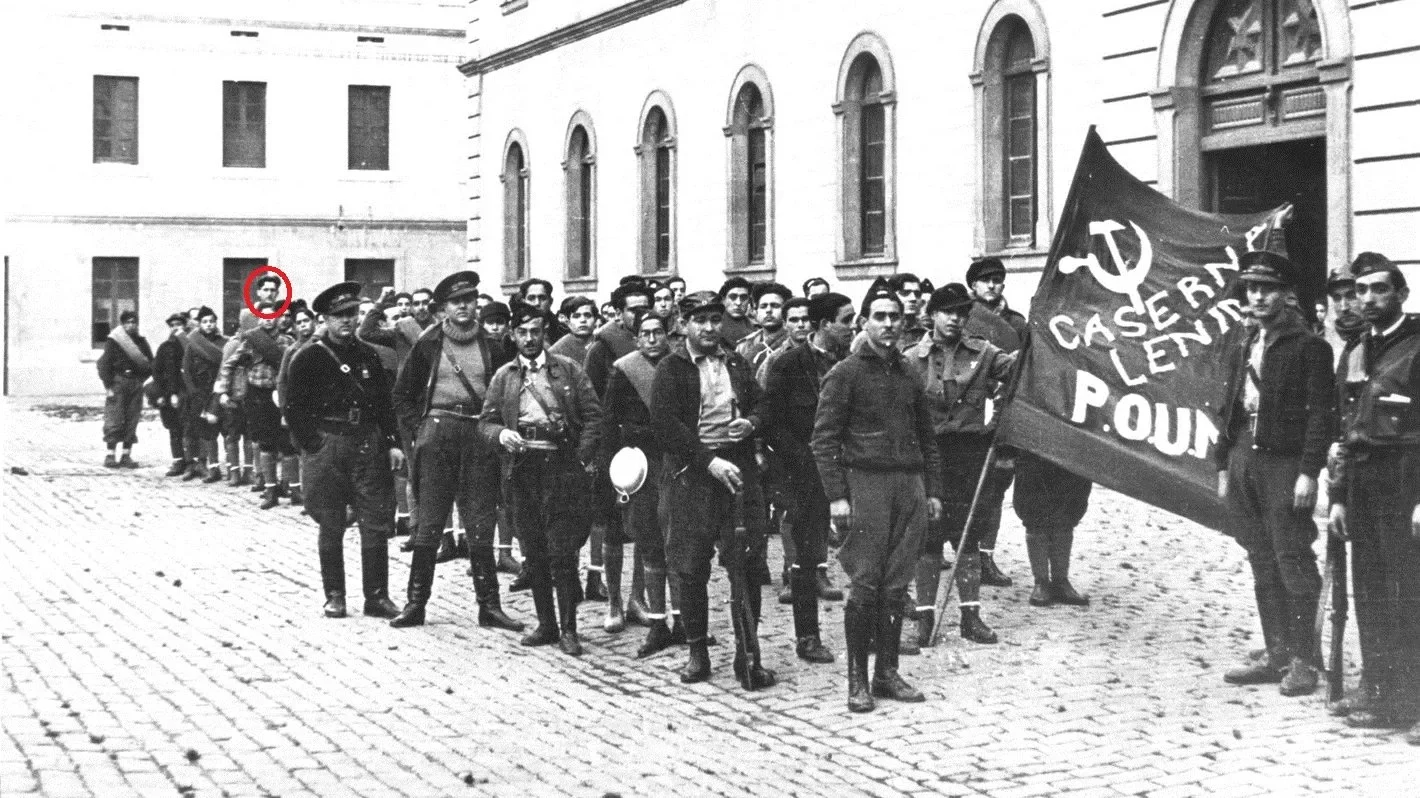
Orwell’s experiences in the Spanish Civil War helped sharpen the fear running through 1984: political loyalty could replace reality as the standard for truth.
He fought on the Republican side against Franco. He also witnessed repression within the anti-fascist camp and the persecution of the POUM, the organisation whose militia he had joined. Opposing fascism didn’t protect him from recognising authoritarian behaviour among supposed allies.
In “Looking Back on the Spanish War”, he described reports of battles that hadn’t happened and accounts that erased or distorted actual events. What frightened him was the willingness to manufacture history around a political requirement. That’s a more demanding position than distrusting your opponents’ newspapers.
It requires asking what you do when your preferred account collapses. Do you investigate? Correct yourself? Or decide the evidence must be fraudulent because accepting it would make dinner with your political friends uncomfortable?
Orwell understood that propaganda needs distributors as well as producers. Some wear official uniforms. Others are perfectly ordinary people delighted to receive something that confirms how clever they already thought they were.
The Book Is About a System, Not Just a Camera
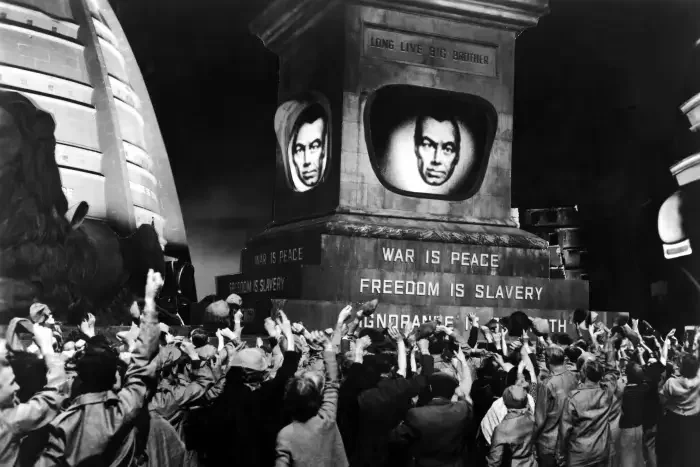
The story follows Winston Smith, a Party member living in Airstrip One, formerly Great Britain, within the superstate of Oceania. His work at the Ministry of Truth involves altering records to match the Party’s requirements. Big Brother supplies the regime’s omnipresent face.
Winston tries to preserve an independent inner life. His relationship with Julia offers forbidden intimacy, while O’Brien appears to offer a connection to organised resistance. That apparent opening leads into the regime’s machinery of entrapment and punishment. The novel’s first part establishes Winston’s circumstances; the second develops his rebellion.
The machinery matters because its parts reinforce one another. Monitoring makes dissent dangerous. Altered records undermine verification. Ideological language limits acceptable thought. Fear discourages trust.
Take one feature out of that structure and you may still have a serious problem. But you haven’t automatically reproduced the whole system. A building’s security camera deserves questions about access, retention, oversight, and abuse. Calling it Big Brother answers none of them.
It does, however, announce that you remember the poster.
The Ministry of Truth Doesn’t Merely Tell Lies
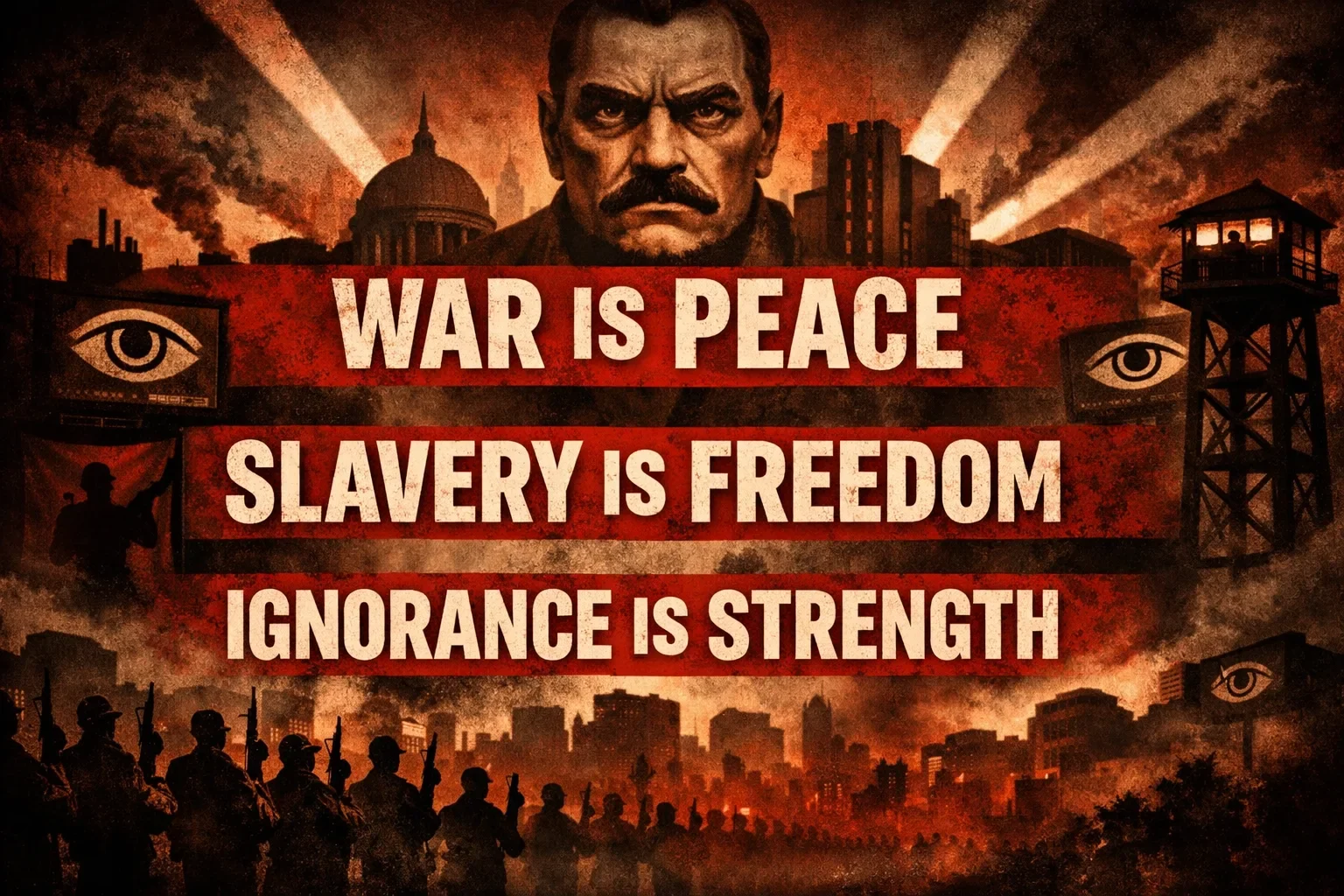
Winston’s job exposes something more disturbing than ordinary political dishonesty: the destruction of the evidence needed to establish dishonesty.
Records are rewritten so the Party’s predictions appear correct. Earlier versions disappear. Even a reduction in the chocolate ration can be presented as an increase. Part One shows the administrative work behind this manufactured reality.
The useful modern comparison concerns that mechanism, rather than the mere existence of an inaccurate statement. A newspaper publishing a visible correction acknowledges that an earlier account was wrong. An institution silently replacing evidence while insisting nothing changed is doing something different. Context, transparency, and access to the original matter.
Neither is every historical reassessment an attempt to erase history. Discovering new evidence and changing an interpretation can improve our understanding. Refusing to preserve inconvenient evidence prevents that process.
The distinction is whether reality can correct the story. If your preferred narrative is protected from every possible test, you aren’t defending historical truth. You’re maintaining a shrine. Those require regular dusting and very little thought.
Newspeak Is More Than Vocabulary You Find Annoying
Newspeak is the Party’s engineered language. Its intended purpose is to reduce the possibilities for unorthodox thought by removing words and meanings that could express it.
The book's appendix explains that this project is unfinished in the novel’s present. Complete replacement of ordinary English is anticipated around 2050. The regime is attempting something over generations, rather than operating a magical dictionary that instantly switches off everyone’s brain. “The Principles of Newspeak” explains the design.
That distinction gets lost when people call any unfamiliar terminology Newspeak. New words can provide more precise ways of describing experience. They can also obscure, intimidate, or enforce ideological conformity. You have to examine what they do.
Ask whether language enables a clearer account of reality or prevents one. Can people question its assumptions? Explain alternatives? Describe what the approved terminology leaves out?
Orwell explored related problems in “Politics and the English Language”, attacking evasive phrasing that makes brutality sound respectable. A phrase like “administrative adjustment” deserves scrutiny if it conceals people losing their homes. An unfamiliar word describing something accurately doesn’t become totalitarian because you dislike pronouncing it.
Consider an employer describing redundancies as an opportunity for organisational renewal. The useful response is to translate the euphemism back into concrete events: jobs are disappearing, people are losing income, and someone has made that decision. Then assess the reasons offered.
Compare that with a specialist introducing a term that distinguishes two previously confused ideas. Both involve unfamiliar language. One may conceal consequences; the other may make them easier to discuss. Treating them as identical gives the evasive speaker a free pass. Your irritation is not a linguistic theory.
Doublethink Isn’t Changing Your Mind

Doublethink involves accepting contradictory beliefs while managing the awareness of their contradiction. It sustains a system in which the Party must always be right, even when its claims change. Part Two sets out its function.
Changing your opinion after receiving better evidence is different. That’s learning. We used to encourage it. Hypocrisy is different too. Someone can knowingly apply a double standard without believing the explanations they offer. The concepts overlap in practice, but they aren’t interchangeable.
A useful contemporary analogy would be a partisan who treats their leader’s reversal as proof that the leader was right on both occasions, while refusing to acknowledge any reversal occurred.
The harder application is personal. Can you remember criticising conduct you now excuse? Can you explain the changed circumstances honestly? Would your explanation survive the names being swapped?
You don’t diagnose doublethink by discovering your opponents have complicated views. Sometimes reality is complicated. Occasionally, even the people you dislike have noticed.
The Real Horror Is What Happens Inside Winston
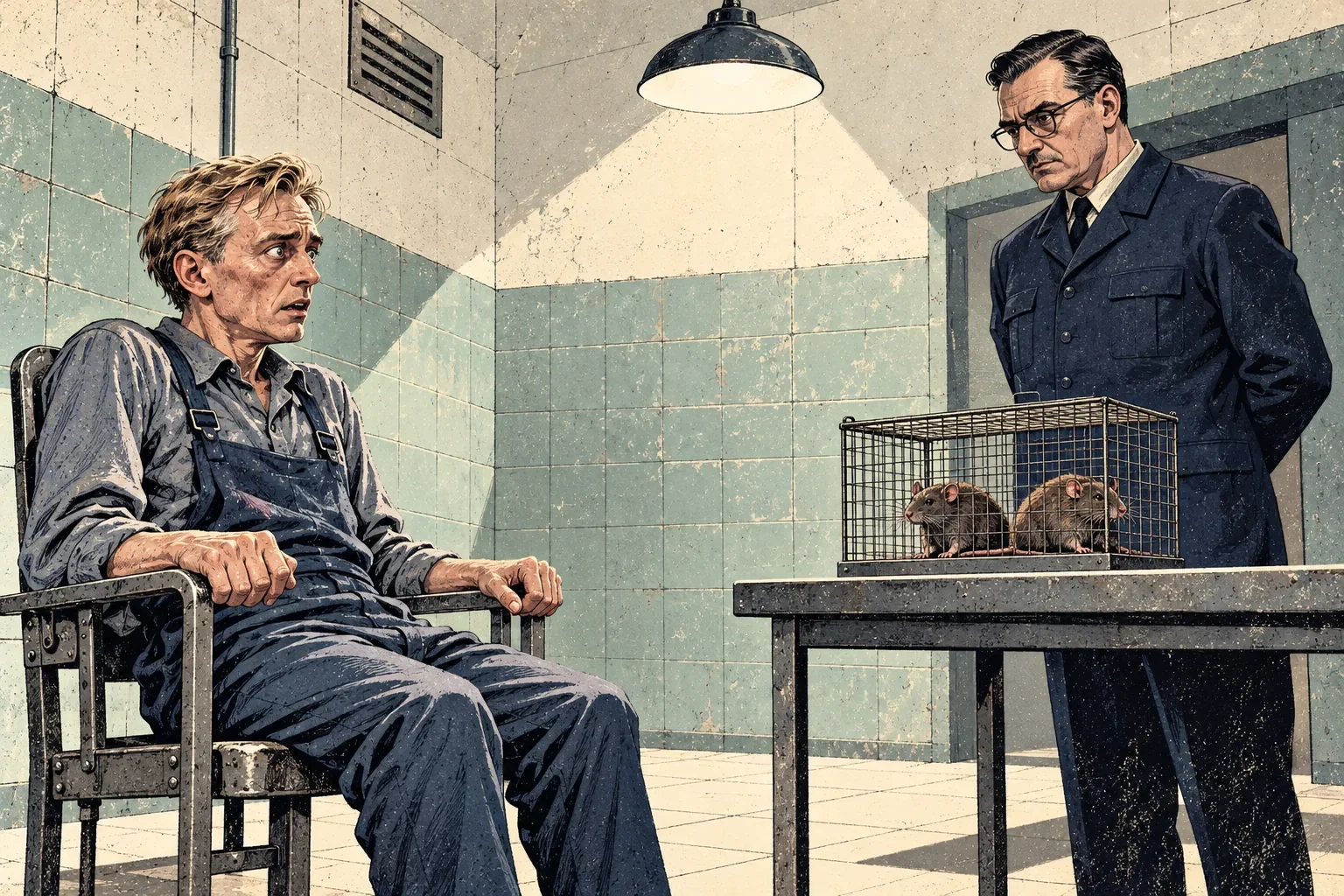
The novel’s final movement makes clear that compliance alone doesn’t satisfy the Party.
O’Brien’s torture aims to break Winston’s independence of judgement. Room 101 turns his most overwhelming fear against his attachment to Julia. The closing declaration, “He loved Big Brother,” signals a devastating internal defeat. Part Three makes the stakes explicit.
Orwell takes the destruction of freedom inside the person. O’Brien presents domination as the Party’s purpose, rather than a temporary sacrifice on the road to public happiness. That makes the regime especially chilling: there is no promised point at which its rulers intend to stop. Submission is the product, not an unfortunate manufacturing defect.
That’s why reducing the book to surveillance equipment loses so much. The ultimate ambition is authority over what a human being can recognise as true and whom they can love. It also explains why treating Winston as a ready-made flattering identity is suspect.
You don’t become an independent thinker simply by disagreeing with an institution. You can disagree because you’ve assessed the evidence, or because a different authority has supplied an equally comfortable script.
Reflexive disbelief is still reflexive. If your method is to believe the opposite of whatever a disliked newspaper prints, that newspaper remains in charge of your thinking. It has simply acquired a reverse gear.
Love, Class, and War Don’t Fit Neatly on a Meme

Winston and Julia’s relationship matters because private attachments offer loyalties outside the Party. Their eventual betrayal makes the destruction personal. It’s harder to turn that into an uplifting poster.
The novel also examines hierarchy and permanent conflict. The political explanation Winston reads connects managed scarcity and continuing war with the preservation of power. The proles exist outside the Party’s most intensive ideological discipline, but their potential doesn’t become a successful uprising within Winston’s story. Part Two develops these questions.
These elements complicate the convenient reading in which freedom means leaving a heroic individual alone with a motivational slogan. Material conditions matter. Education matters. Access to reliable information matters. So does the possibility of acting with others. A person can possess opinions and still lack any practical means of challenging power.
Meanwhile, a public encouraged to hate a rotating enemy may pay less attention to whoever controls its own institutions. That’s a useful question to ask of political messaging.
It isn’t permission to declare every military conflict fictional or every security concern manufactured. An analogy should help investigate the evidence. It shouldn’t arrive with the conclusion already stamped.
Why Everyone Wants Orwell on Their Team

Orwell offers an extraordinarily portable vocabulary.
Big Brother turns surveillance into a person. Newspeak gives manipulative language a name. The memory hole gives disappearing evidence a physical destination. These images are easier to remember than a detailed explanation of institutional accountability.
They’re also emotionally useful. Invoking 1984 casts the speaker as someone who recognises oppression while everyone else obediently claps. That’s a splendid role. The lighting is flattering, the moral complexity minimal, and apparently no additional reading is required.
The book’s cultural afterlife can encourage serious engagement too. In January 2017, Kellyanne Conway’s defence of disputed inauguration crowd claims as “alternative facts” prompted Orwell comparisons as sales of the novel surged. Publishers Weekly documented the renewed demand.
There was a recognisable reason to discuss official language and factual accountability. But a relevant comparison still needs an argument. A phrase associated with dishonest authority doesn’t establish that every feature of Oceania has arrived.
Buying a book can begin that argument. Photographing its cover and declaring victory generally ends it prematurely.
Orwellian Has Become an All-Purpose Accusation

Today, “Orwellian” circulates as shorthand for intrusive surveillance, censorship, deceptive official language, enforced conformity, and manipulation of the public record. Those associations make sense. The trouble starts when the word replaces the explanation.
Imagine a government imprisoning journalists for reporting documented misconduct. Now imagine an editor refusing an unsupported article, a platform removing a post, and another reader publicly disagreeing with you.
All involve expression. Their powers, consequences, and justifications differ enormously. Calling all four the Thought Police hides those differences. It can make an ordinary dispute sound like state persecution while making actual persecution harder to describe precisely.
That doesn’t place private institutions beyond criticism. A company controlling a major communications channel can exercise substantial power. Employment pressure and coordinated intimidation can restrict expression without a government signing the paperwork.
The right response is to identify the mechanism and examine its consequences. Who controls access? What can they enforce? Is there an appeal? Can the decision be challenged publicly? What happens to someone who refuses?
Those questions produce an argument. “Orwellian” typed in capitals produces a noise.
Proportionality matters here. Two practices can share a feature without being equivalent in severity. Secret monitoring by an abusive employer and comprehensive surveillance by a dictatorship both raise questions about power and privacy. Describing the connection is useful. Erasing the difference is not.
Conversely, rejecting every comparison because the situations aren't identical would make political language nearly useless. The question is whether the shared feature explains something important, rather than merely borrowing the emotional force of the worst possible example.
The Most Convenient Misreading Is Always About Them

The easiest way to misuse Orwell is to apply his standards selectively.
You condemn censorship while demanding the suppression of your opponents’ books. You denounce surveillance until it targets a group you distrust. You demand rigorous evidence from hostile sources while forwarding friendly nonsense because it feels plausible.
These are illustrative contradictions, not proof that everyone holding a particular political position behaves this way. They expose the temptation the novel helps us examine: treating the same action differently according to who benefits.
In “Notes on Nationalism”, Orwell explored loyalty that overrides factual and moral judgement. His usage extended beyond attachment to a country. Causes and political groupings could command the same surrender. That argument doesn’t require pretending every faction is equally powerful or equally dishonest.
False balance is another way to stop investigating. If one institution destroys records and another preserves them, describe the difference. If one politician lies, examine that lie. You don’t need to manufacture matching offences to demonstrate your impressive neutrality. But your standards should remain recognisable when the beneficiaries change.
There’s another giveaway: the comparison has no conditions under which it could be wrong. Ask what evidence would change the speaker’s mind. If the answer is nothing, the discussion has stopped being an investigation.
A correction proves censorship. A denial proves a cover-up. The absence of evidence proves how efficiently the evidence was destroyed. Conveniently, every road leads back to the original accusation.
That reasoning can protect any belief whatsoever. It therefore gives us no useful way of deciding which belief deserves confidence. Otherwise you’re defending a team shirt.
A Warning Requires Better Habits, Not Better Slogans
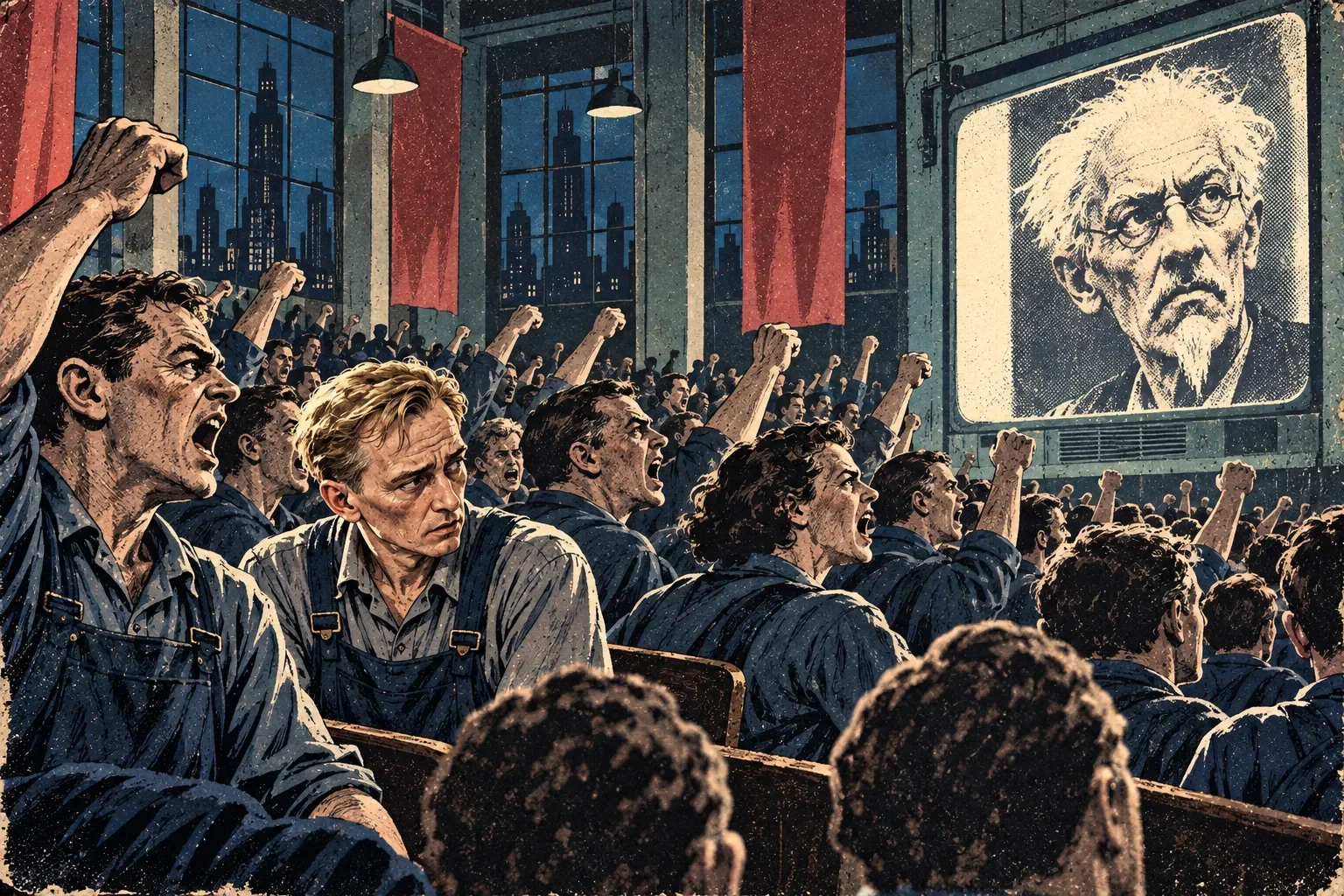
None of this means you need a totalitarian state in its finished form before Orwell becomes relevant. That would make a warning useful only after prevention had become impossible. A smoke alarm installed once the house is ash is a disappointing purchase.
You can identify an Orwellian tendency without declaring your entire society identical to Oceania. Explain the feature you mean. Show the evidence. Acknowledge where the comparison stops. Distinguish a proposal from an enacted policy, an isolated abuse from a system, and criticism from punishment.
Read the appendix too. Its retrospective description of Newspeak has encouraged an interpretation that the Party’s project eventually failed. That’s a possible reading, not a secret final chapter proving Winston won. The Open University’s discussion acknowledges the interpretive question.
The title of this article is deliberately provocative. Plenty of people quote Orwell accurately and understand him well. Misunderstanding cannot be established by looking at someone’s bookshelf, voting record, or irritating profile photograph. It becomes visible in the argument: missing context, selective standards, unsupported analogies, and conclusions insulated from correction.
Understanding Orwell also means resisting the urge to make him infallible. His novel is a constructed argument, with characters, narrative choices, and assumptions readers can question. Respecting a writer doesn't require appointing him the permanent referee of political reality. If a claim is sound, it should survive without a famous surname standing guard beside it.
Read the book as a novel about human vulnerability and organised domination. Read Orwell’s essays alongside it. Allow both to disturb assumptions you brought with you.
And before announcing that Orwell predicted your latest grievance, establish what actually happened. He spent rather a lot of time worrying about that bit.